
Services & Initiatives
Six ways to bring chess psychology into your game, classroom, or club.
Every offering is built on the same idea: chess reveals the mind, and the mind shapes chess. Below are the six ways I bring that to individuals, teams, schools, and organizations.
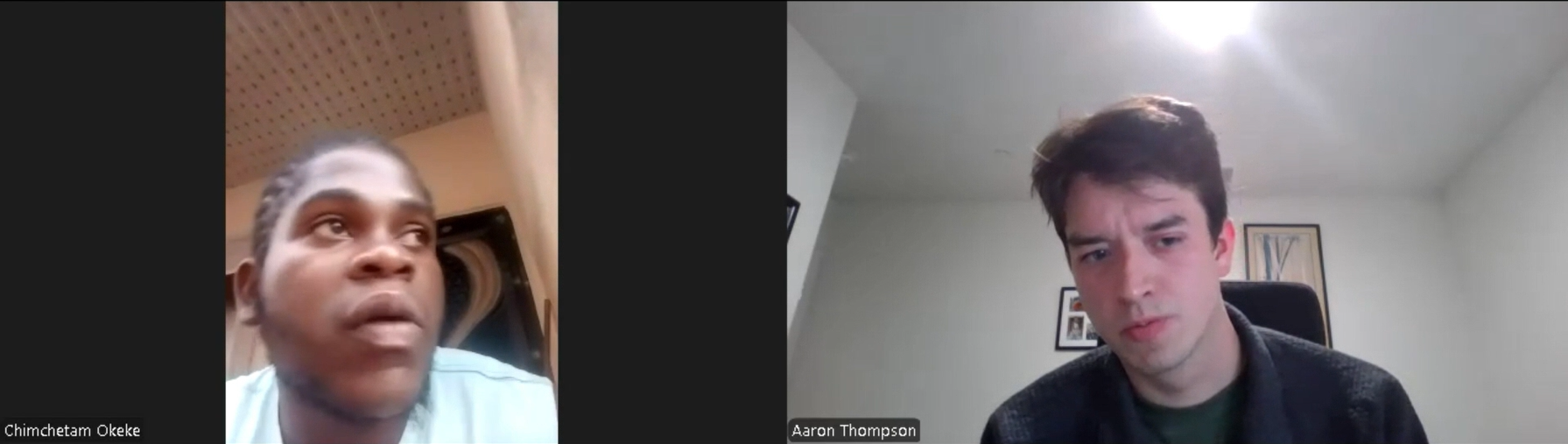
A meaningful dialogue with friend and colleague Daniel Okeke on using chess to process trauma, in his case, life after a devastating fire.
One-on-one work connecting how you think with how you play.
Individual sessions for tournament players who have plateaued not because of opening prep or endgame technique, but because of what happens between the ears under pressure: tilt after a blunder, freezing in won positions, or carrying a bad round into the next one. Sessions draw on clinical training in family systems work alongside 2000+ level competitive experience to build a practical, personalized mental game plan.
Structured psychological pathways in note form, an outline of how I think, before they become formal curricula and classes.
Chess-based lesson plans that teach emotional regulation and decision-making.
Structured curricula for schools, after-school programs, and chess clubs that use the board as a teaching tool for patience, impulse control, resilience after loss, and clear thinking under time pressure. Curricula are sequenced by age and skill level and come with facilitator notes so classroom teachers and volunteer coaches can run them without a psychology background.
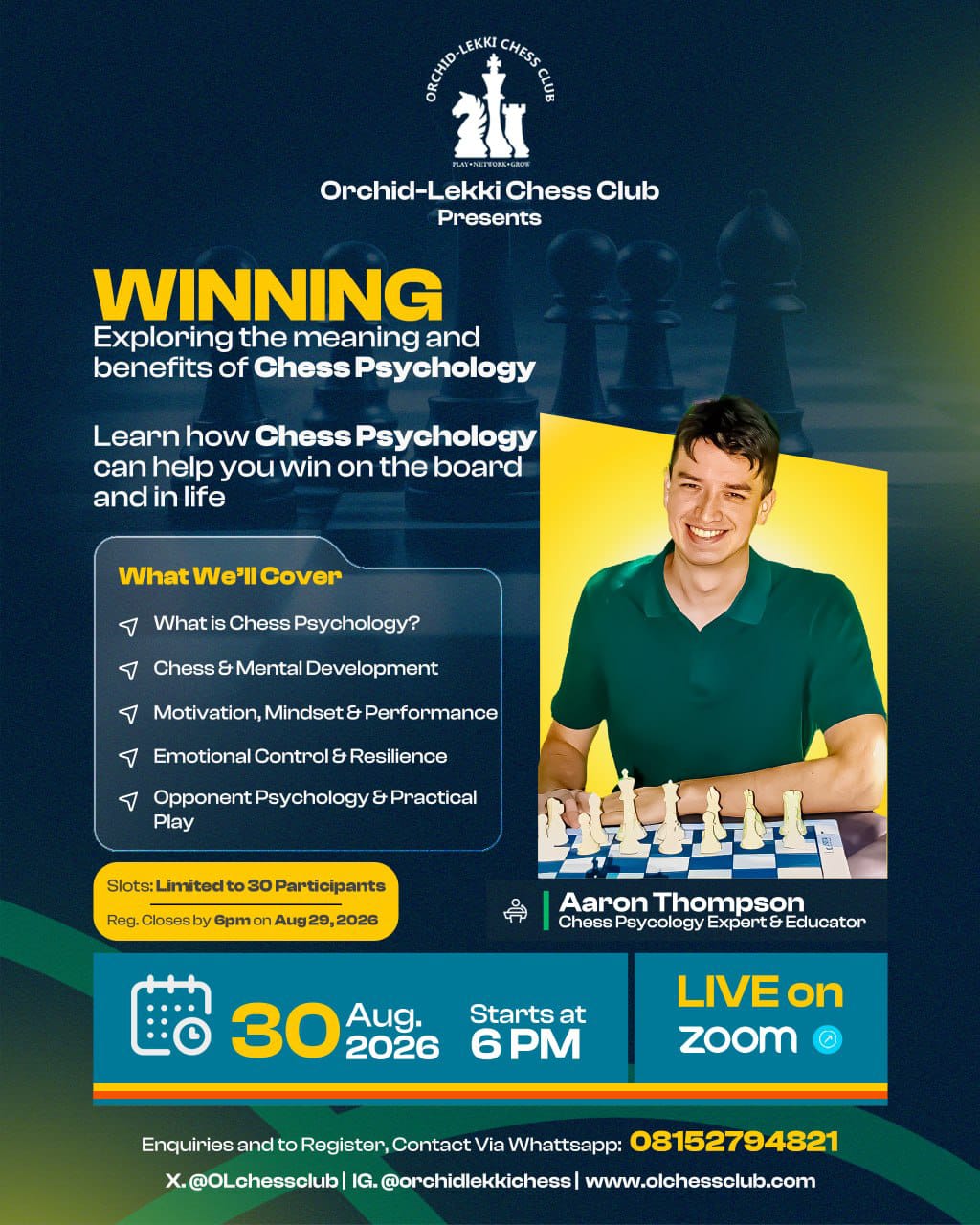
An example from Nigeria’s largest chess club!
Keynotes and talks on the mind behind the moves, for chess and non-chess audiences alike.
Keynote and breakout talks for conferences, education summits, and corporate audiences on what competitive chess reveals about decision-making under pressure, emotional regulation, and self-awareness. Talks are adapted for chess federations and clubs as well as audiences with no chess background who are interested in the psychology.
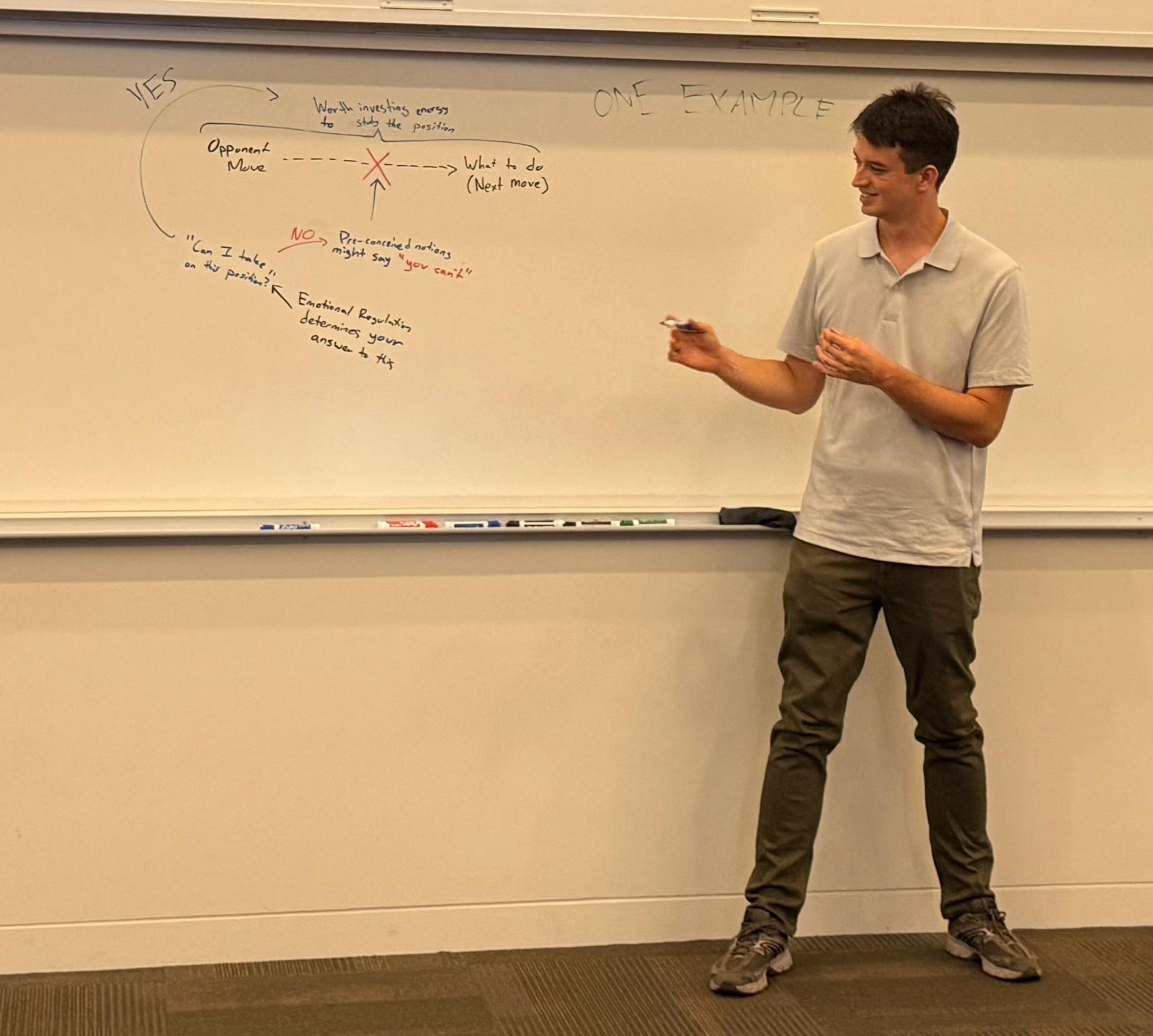
Hands-on workshops for teams of players working through the same mental blocks together.
Half-day and multi-week workshop formats for scholastic teams, club cohorts, and camps. Groups work through shared mental-game challenges, including performance anxiety before rated games, post-loss recovery, and board vision under fatigue, using guided game review, role play, and structured discussion rather than lecture.
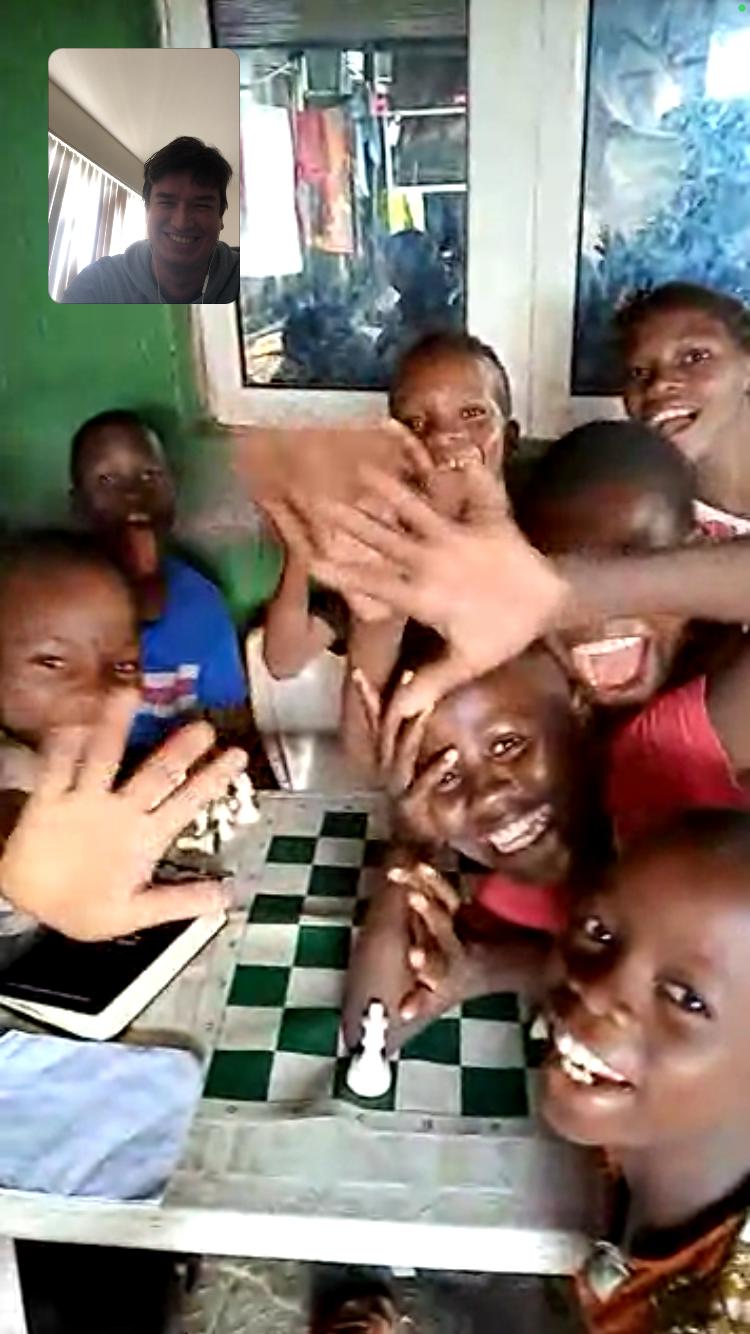
At CIS-A: implemented ACE scoring, embedded mental health-informed support, and worked with on-ground teams to protect at-risk youth.
Advising administrators and club directors on building mentally healthy chess programs.
Consulting engagements with school administrators, nonprofit chess programs, and club boards on program design: how to structure tournament preparation without burning kids out, how to train coaches to recognize and respond to a struggling player, and how to build a club culture where losing is treated as data instead of shame.
Helping parents support a young player without taking over the game.
Consultations and small-group sessions for parents of competitive and recreational players: what to say (and not say) after a tough loss, how to support a child's growth without steering their game, and how to tell when frustration at the board is really about something else. Offered as one-on-one parent consultations, group sessions for club parent communities, or a short video call for a quick gut-check between tournaments.